How to Choose the Sanitary Gauge That’s Right for Your Application
Conditions in food or pharmaceutical processing environments differ dramatically from plant to plant. When searching for a sanitary gauge for a particular application, there are several important factors to consider.
- Material – The FDA requires all materials used in the food production process to be corrosion-resistant, non-reactive, and sufficient in weight and thickness to withstand repeated washing. Stainless steel checks all the boxes and has become the standard metal used to manufacture sanitary gauges and other food processing equipment. It’s durable, it resists corrosion caused by a wide variety of chemicals, and can be electropolished to a smooth, shiny, easy-to-clean surface that prevents bacteria from growing. There are three main food-grade stainless steel alloys commonly used in food, pharmaceutical and biotech production so when comparing gauges, the product being produced will affect the stainless steel options.
- Food Grade 304 - Most commonly used but can be degraded by some corrosives and excessive exposure to salt
- Food Grade 316 - High chromium and nickel content and strong resistance to acids, alkalis and chlorides (such as salt)
- Food Grade 430 - Exceptional resistance to stress corrosion cracking. High resistance to nitric and organic acids
- Connections and Fittings – The process of disassembling, cleaning and reconfiguring clamp connections is critical to maintaining a sterile environment that complies with various industry regulations and standards. Tri-clamp connections, which consist of two ferrule ends, a seal, and a clamp, have become the industry standard because they’re especially easy to disassemble and clean. There are no threads or obstructions, no teflon tape required, and they form a secure seal that prevents bacterial growth.
- Seals – Automated clean-in-place (CIP) and/or steam-in-place (SIP) sterilization processes that use chemicals, heat and water to thoroughly clean machinery can damage elastomer seals, so the sealing materials used in sanitary applications must be toxicologically harmless and resistant to abrasion from aggressive cleaning and disinfecting. Sanitary gauges developed for use in SIP applications use seals that are designed to hold up against the high temperatures common in pharmaceutical applications, while the seals used in CIP applications are more resistant to harsh chemicals necessary to maintain a hygienic process environment in food, dairy and beverage production. If a sanitary gauge boasts both CIP and SIP, it can be used safely in either environment.
The Ralston LC20 Digital Sanitary Pressure Gauge
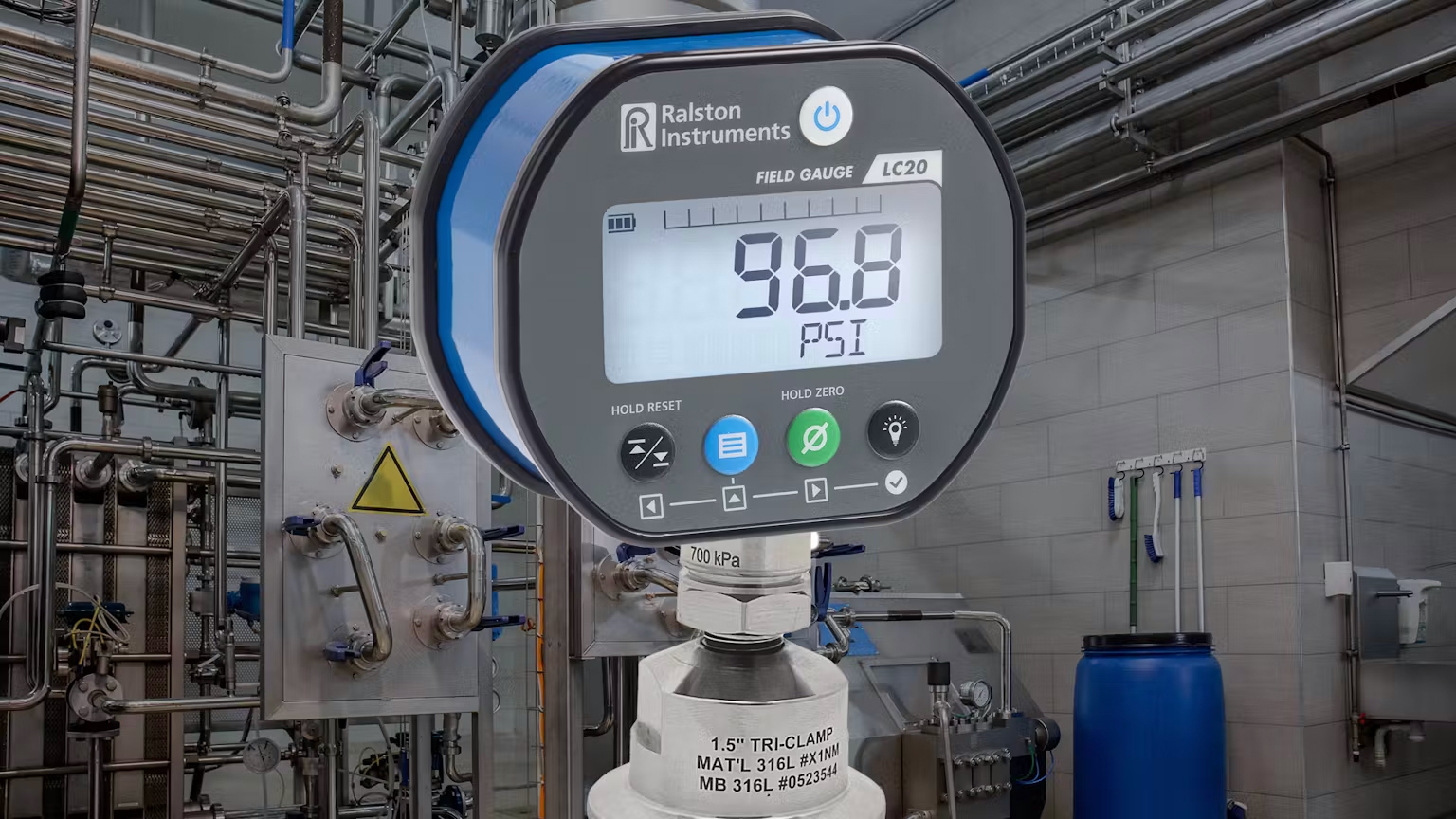
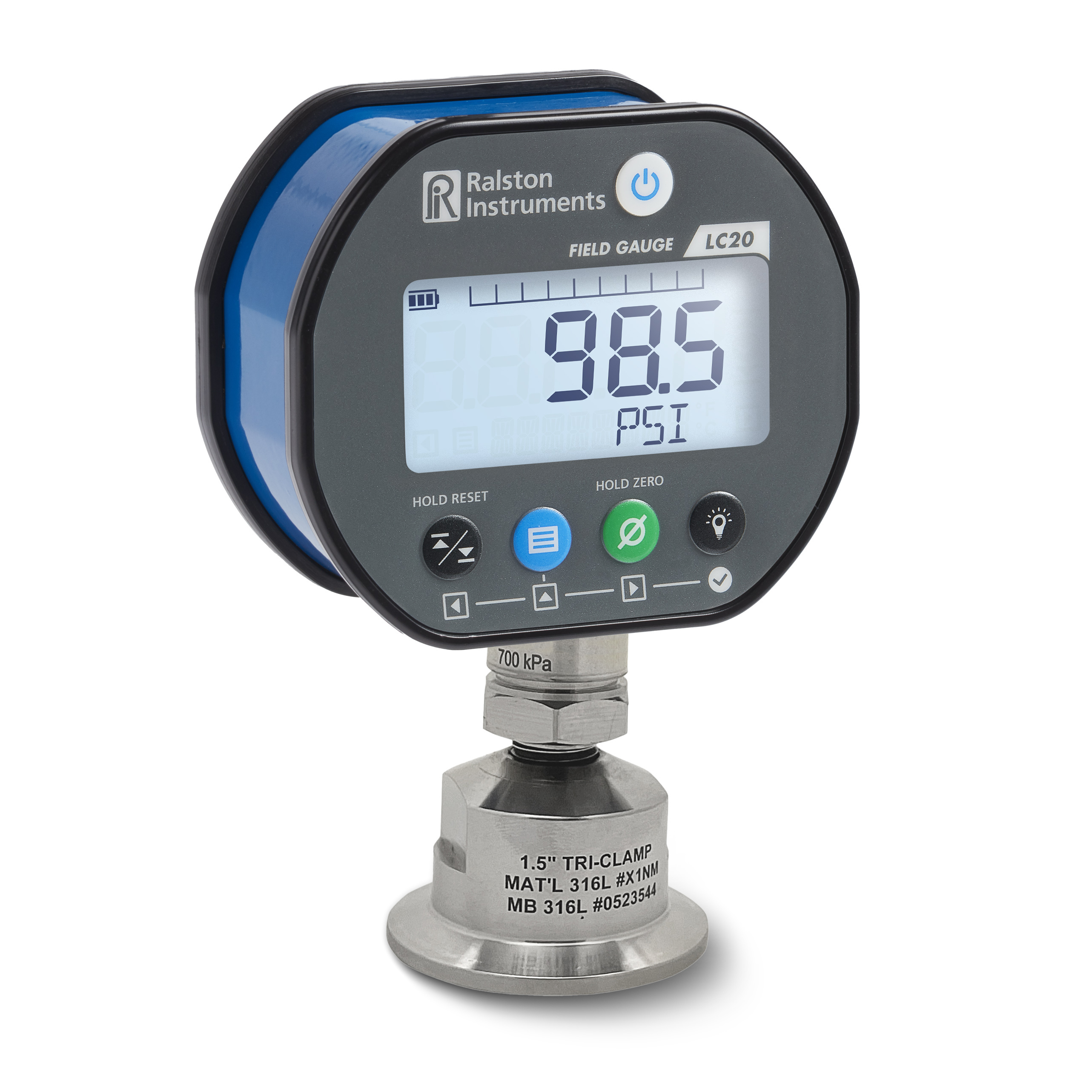
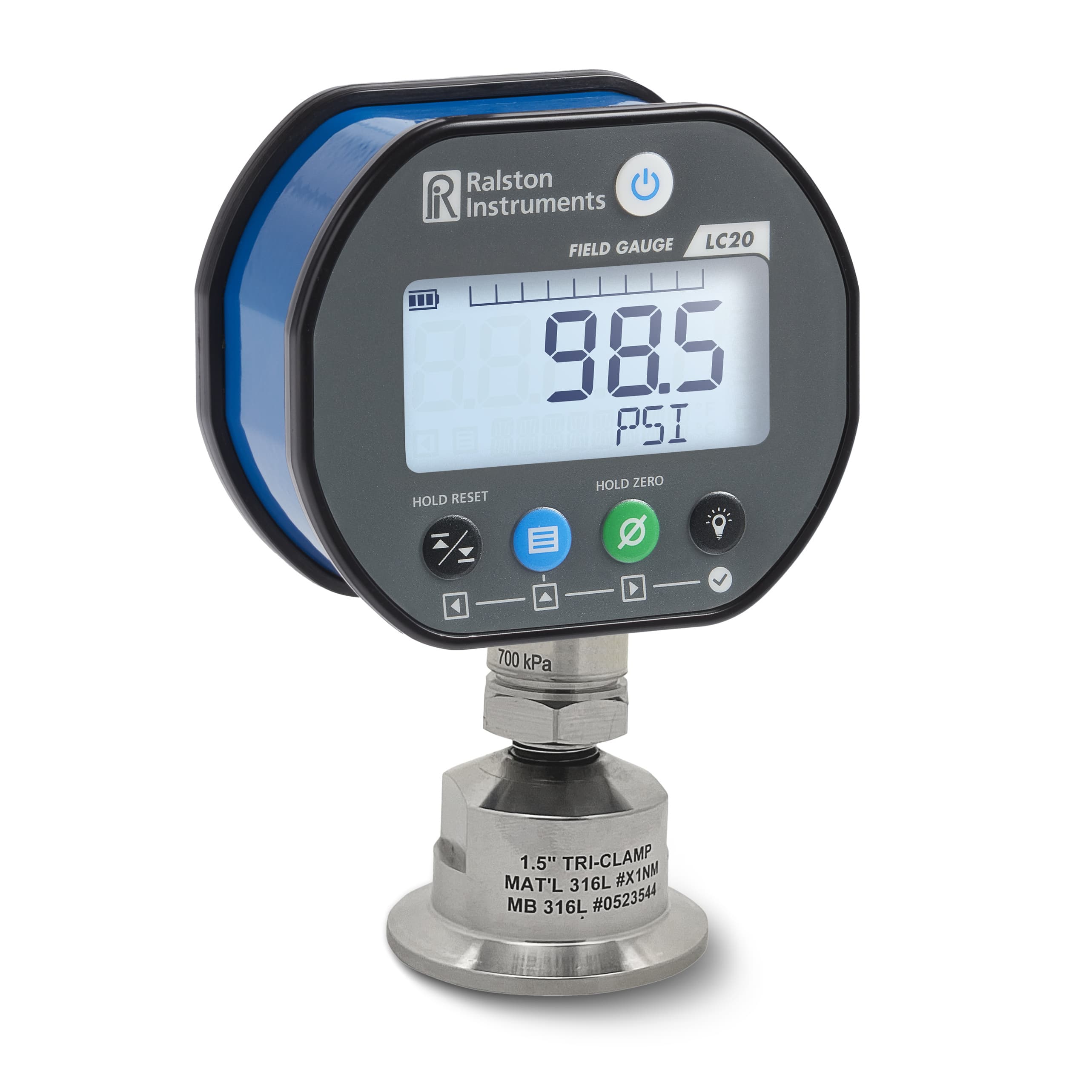
There are a number of different sanitary gauges available that comply with federal regulations and food code laws, and our LC20 Diaphragm Pressure Gauge is right up there with the best of them. Manufacturing facilities that use homogenizers, separators and heat exchangers put a lot of stress on the equipment, but the LC20 is engineered to maintain impressive ±0.1% full scale accuracy in even the most abusive environment. With an IP67 rating, an ultra smooth diaphragm surface, and 3-A certified sanitary trip-clamp seals that perform consistently in both CIP and SIP environments, the LC20 is a great option for applications in the food & beverage, pharmaceutical and biotech industries.